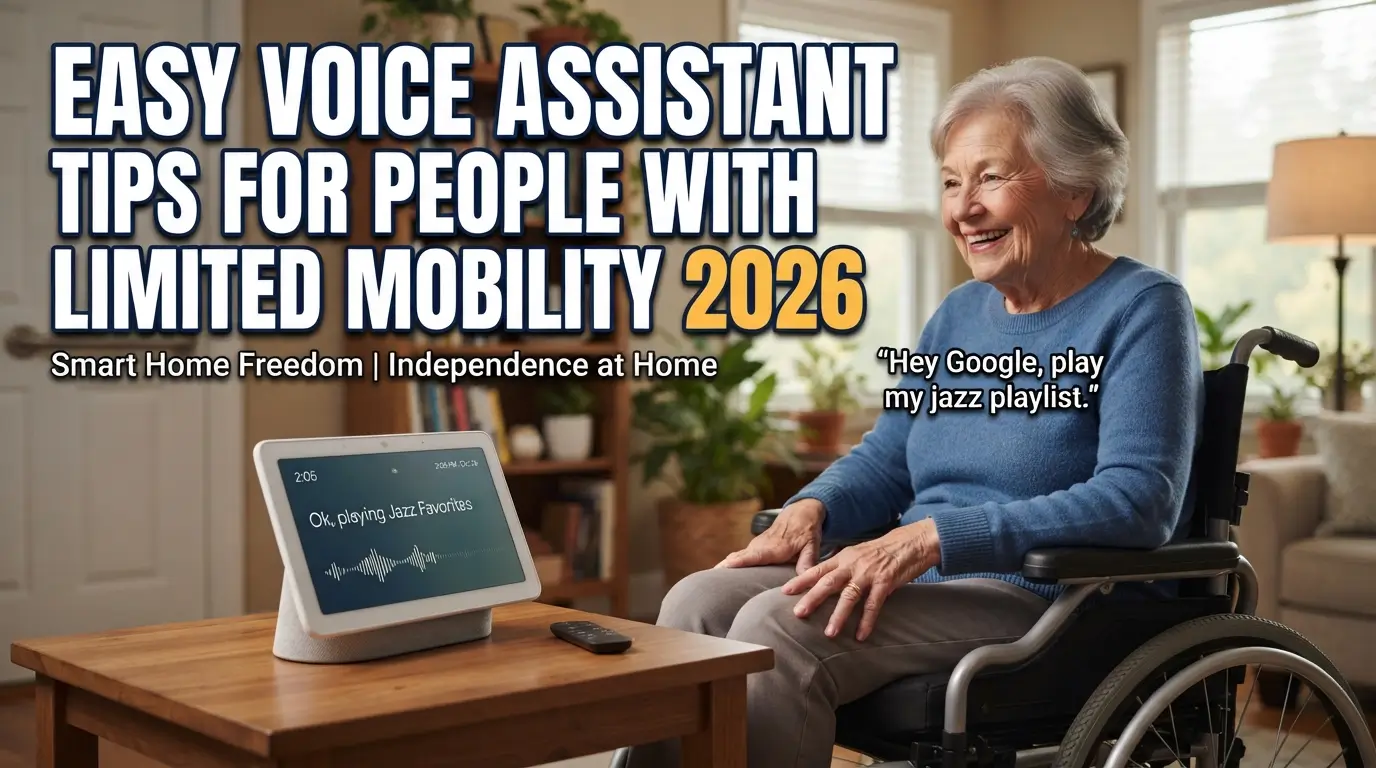
Easy Voice Assistant Tips for People with Limited Mobility
My mom couldn’t reach the light switch from her bed anymore. Easy Voice Assistant Tips for People With Limited Mobility One afternoon, I set up a voice assistant on her nightstand, and within minutes, she was turning lights on and off just by talking. That single moment made me realize how transformative easy voice assistant tips for people with limited mobility could actually be.
If you’re managing arthritis, recovering from surgery, or living with a condition that limits how much you can move around, voice assistants aren’t just convenient. They’re freedom. Easy Voice Assistant Tips for People With Limited Mobility They’re independence. They’re the difference between asking someone else to adjust your thermostat and doing it yourself.
I’ve spent months testing what works and what doesn’t. Here’s what I’ve learned.
1. Start With Just One Command You Actually Need
Before you overwhelm yourself with all the possible features, pick one thing you struggle with most. Easy Voice Assistant Tips for People With Limited Mobility For my mom, it was the lights. For someone else, it might be playing music, setting timers, or checking the weather.
When you master one command, your brain creates a habit. You stop thinking about it and just do it. Once that feels natural, add another one. This isn’t laziness. Easy Voice Assistant Tips for People With Limited Mobility It’s smart. Voice assistants work best when you use them regularly, and you’ll only use them regularly if they solve a real problem you face every single day.
2. Position Your Device at Eye Level or Ear Level
This matters more than people think. If your voice assistant sits on a low shelf or the floor, you’re straining your neck to hear it. Easy Voice Assistant Tips for People With Limited Mobility If it’s across the room, you’re shouting commands, which gets exhausting and feels unnatural.
I moved my mom’s device to a small stand next to her bed, about level with her ear when she’s lying down. Now she talks to it like she’s having a quiet conversation. Easy Voice Assistant Tips for People With Limited Mobility Placement removes friction. When a device is in the right spot, you actually use it instead of reaching for your phone out of habit.

3. Create Routines for Your Most Repetitive Tasks
Voice assistant routines are one of the best features nobody uses. Easy Voice Assistant Tips for People With Limited Mobility A routine is basically a shortcut that triggers multiple actions with one command. Instead of saying “turn off my bedside lamp, close the blinds, and play sleep sounds,” you can say “goodnight” and all three things happen.
Think about what you do every morning or every evening. Easy Voice Assistant Tips for People With Limited Mobility What sequence of actions happens over and over? That’s your routine. Set it up once, and it saves you dozens of commands every week. It also removes the mental load of remembering what to ask for next.
4. Use Voice Commands for Temperature and Lighting
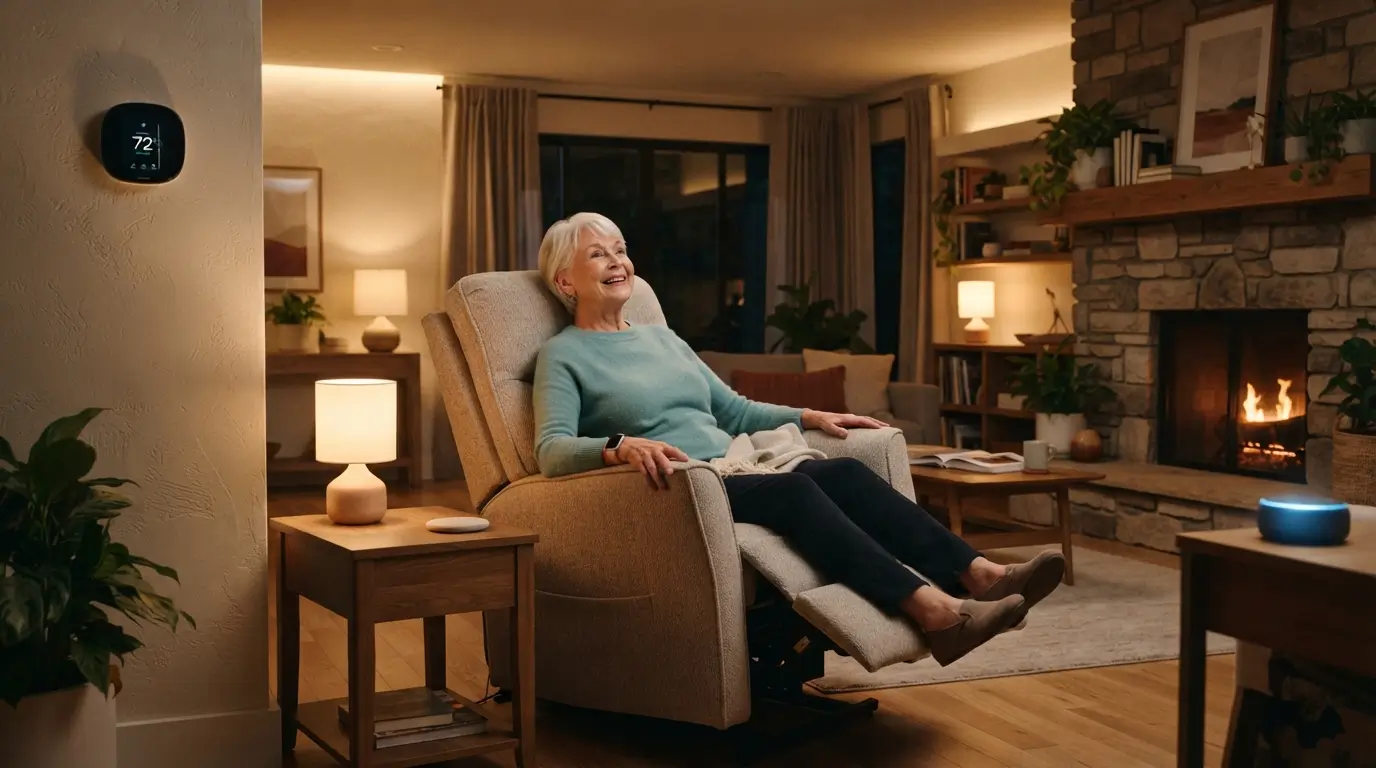
Temperature and lighting control made the biggest difference for my mom. Easy Voice Assistant Tips for People With Limited Mobility Reaching a thermostat or fumbling with light switches is hard when your mobility is limited, but voice control makes it invisible.
If you don’t have smart bulbs or a smart thermostat yet, they’re not as expensive as they used to be. Easy Voice Assistant Tips for People With Limited Mobility Philips Hue and LIFX make reliable smart bulbs, and Nest or Ecobee thermostats work seamlessly with voice assistants. You can adjust the room to exactly what you need without getting up or asking someone else.
5. Set Reminders and Timers Out Loud Instead of on Your Phone
This is one of those tips that seems simple but actually changes how you function. Easy Voice Assistant Tips for People With Limited Mobility Instead of unlocking your phone, opening an app, and trying to tap a small button, you just say “remind me to take my medication in 30 minutes” or “set a timer for laundry.”
When you’re in pain or your hands don’t move the way they used to, every extra step feels like climbing a mountain. Voice reminders and timers cut out the middleman. Easy Voice Assistant Tips for People With Limited Mobility They also work better because you hear them announced aloud, so you don’t miss it because your phone was in another room.
6. Ask for Recipe Ideas, Meal Planning, and Grocery Lists
Meal planning becomes so much easier when you can talk things through with your voice assistant. Easy Voice Assistant Tips for People With Limited Mobility Ask it what you can make with chicken, olive oil, and tomatoes. Get ideas without googling. Add ingredients to a shopping list just by saying them.
I watched my mom use this while sitting at the kitchen table. She’d ask for dinner ideas, listen to three or four suggestions, add the ingredients she needed to her list, and have the whole meal planned in minutes. Normally, this task would mean pulling out a cookbook, searching online, and typing everything down. She cut it to a conversation.
7. Control Your Entertainment Without Picking Up a Remote
Finding the remote, squinting at tiny buttons, and remembering which device does what is frustrating when you have limited mobility. Voice control simplifies everything.
Also Read: Phone Camera Tips for New Parents 2026
“Play jazz music” or “turn on the news” or “pause the show” becomes your entire remote. If you’re in bed, on the couch, or anywhere in your home, you don’t need to reach anywhere or struggle with a device. You just speak. Services like Spotify, Apple Music, Netflix, and YouTube all work with major voice assistants.
8. Use Voice Shopping for Groceries and Household Essentials
Reordering your regular items becomes effortless with voice shopping. If you know you buy the same coffee, paper towels, and canned beans every month, you can add them to your cart just by saying so.
This doesn’t replace actually shopping thoughtfully, but it handles the routine stuff. It’s one less trip you have to make or one less thing someone else has to pick up for you. Amazon, Whole Foods, and other retailers support this feature now.
9. Make Phone Calls and Send Messages Hands-Free
Staying connected with family and friends matters, especially when mobility is limited. You can make calls, send text messages, and even send emails through voice commands without touching your phone.
“Call Mom” or “text David and say I’m running late” happen instantly. No passwords to remember, no tiny keyboards to navigate. For people who feel isolated or limited by their condition, this keeps the door to connection wide open.
10. Check Your Calendar and Manage Appointments by Voice
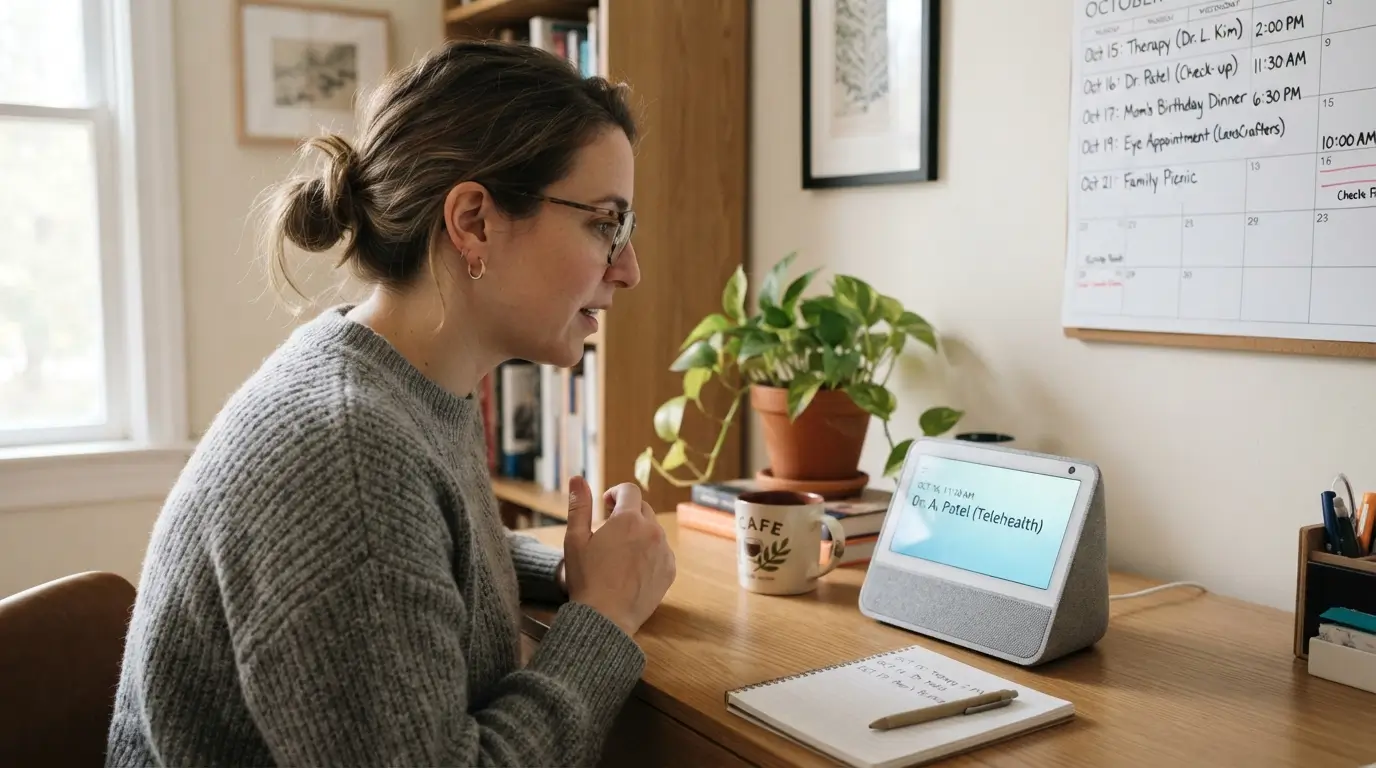
Doctor appointments, therapy sessions, and family events pile up fast. Instead of opening your calendar app and scrolling around, just ask your voice assistant what’s coming up.
“What’s on my calendar today?” gives you everything at once. “Add a doctor appointment on Thursday at 2 PM” gets it scheduled without any typing. This is especially helpful if you manage multiple doctors or specialists, which many people with limited mobility do.
11. Enable Voice Lock or Personal Recognition for Security
This is the part people skip, and then they regret it. If someone else lives with you or visits regularly, you probably don’t want them ordering things or changing your settings.
Voice recognition features let your device recognize your voice specifically. Some assistants also offer voice PIN locks, so commands need a code spoken aloud to execute. It takes two minutes to set up and protects both your privacy and your wallet.
FAQs
What’s the cheapest voice assistant to start with?
The Amazon Echo Dot is usually the most affordable entry point, around 50 dollars. Google Home Mini offers similar pricing. Both work really well for basic tasks like controlling lights, playing music, and setting reminders. Start here if you’re unsure whether voice control is right for you.
Can voice assistants work if I have a quiet voice or speech issues?
Some people worry their voice won’t be recognized. Most assistants are surprisingly adaptable and pick up whispers fine. If you have speech differences, practice a few times so the device learns your pattern. The sensitivity settings also let you adjust how sensitive the microphone is.
Which voice assistant is easiest to use for someone older?
Amazon Alexa and Google Assistant both have simplified interfaces. Alexa’s Huntr app and Google’s companion apps walk you through setup step by step. Neither one is hard, but Amazon has slightly more accessible documentation and customer support specifically for older adults.
Do I need to buy a ton of smart home devices?
Not at all. Start with your voice assistant alone. Use it for reminders, timers, music, and information. Smart bulbs and thermostats come later, only if you want them. Many people get by using just voice control for a few key things and never need more.
Can I control my voice assistant if I’m sleeping or very tired?
Yes, your voice assistant listens whenever the device is powered on and the wake word is spoken. Easy Voice Assistant Tips for People With Limited Mobility You don’t need to be alert or fully awake. “Alexa, turn off the light” works just as well at 3 AM when you’re half asleep as it does during the day.
What if my voice assistant doesn’t hear me the first time?
Just repeat the command. Most assistants ask for clarification if they didn’t catch you. You can also speak a little louder or slower, though usually the device picks up normal conversation just fine. Easy Voice Assistant Tips for People With Limited Mobility If it keeps missing you, check that the microphone isn’t blocked and the device has a clear path to hear you.
Conclusion
Easy voice assistant tips for people with limited mobility aren’t about gimmicks or flashy technology. Easy Voice Assistant Tips for People With Limited Mobility They’re about reclaiming small pieces of independence that chronic pain, illness, or injury tries to take away. The best part? You don’t need to be tech-savvy or buy expensive equipment to start. Pick one command, set up your device, and let it work for you.
Leave a Reply