Wireless Charging Explained for Busy Travelers 2026
My phone battery died at 2% in the middle of a crowded airport, and I had no cable. That moment is why I care about top wireless charging explained for last minute travelers. Wireless Charging Explained for Busy Travelers You have a flight to catch, not time to untangle wires. Here is the honest, tested truth about charging pads, power banks, and what actually works when you are rushing out the door.
What “Top Wireless Charging” Actually Means When You Are Rushing
Most people think wireless charging is magic. Wireless Charging Explained for Busy Travelers It is not. It is inductive charging, a coil in your phone talking to a coil in a pad.
When you are a last minute traveler, you do not need a science lesson. Wireless Charging Explained for Busy Travelers You need to know if the pad will stick, if it charges fast enough to matter, and if it fits in your bag without breaking.
The biggest trap is speed. Wireless Charging Explained for Busy Travelers A cheap pad from a gas station might charge your phone at 5W, which is painfully slow. That is like trying to fill a swimming pool with a teaspoon.
Look for at least 15W for Android phones and 7.5W for iPhones. Anything less is a waste of your time, especially when you are already late.
The Hotel Nightstand Trap (And How to Beat It)
You check into a hotel, exhausted. Wireless Charging Explained for Busy Travelers The nightstand has a built-in wireless charger. You drop your phone on it and go to sleep.
Three hours later, your phone is still at 40% because the case you bought for protection is too thick. Wireless Charging Explained for Busy Travelers This happens more often than you think.
MagSafe changed the game here. Wireless Charging Explained for Busy Travelers Apple’s magnet system snaps into place, so you do not wake up to a dead phone because it slipped halfway off the coil.
If you have an iPhone 12 or newer, get a MagSafe compatible pad. Wireless Charging Explained for Busy Travelers It sticks, it aligns, and it works through most cases. For everyone else, check your case thickness before you blame the charger.
Why Anker and Belkin Are My Go-To Brands for Travel
I have tried the no-name pads and the fancy designer ones. Wireless Charging Explained for Busy Travelers The no-names die in three months. The fancy ones cost as much as a flight.
Anker is my sweet spot. Their MagGo series is compact, folds flat, and charges fast. Wireless Charging Explained for Busy Travelers I have dropped mine in a backpack, sat on it, and it still works.
Belkin is the other one I trust. Their BoostCharge line is boring in the best way. Wireless Charging Explained for Busy Travelers No flashy lights, no weird beeping, just charging.
If you are shopping for top wireless charging explained for last minute travelers, stick to brands that have been around for a while. Wireless Charging Explained for Busy Travelers You want reliability, not a novelty.
The 3-in-1 Folding Charger That Actually Fits Your Bag
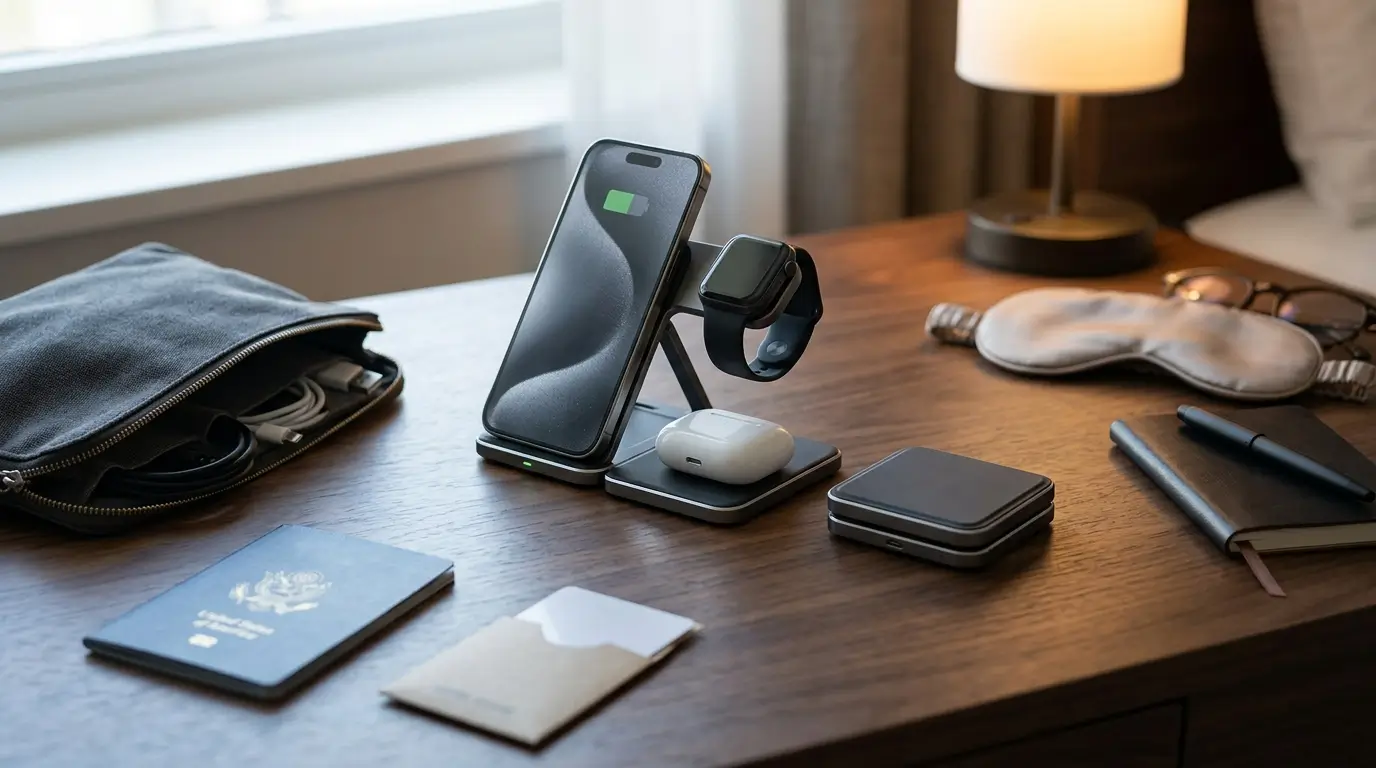
This is the piece of gear that changed my travel routine. Wireless Charging Explained for Busy Travelers It is a single pad that folds out to charge your phone, watch, and earbuds at the same time.
I use the Anker 3-in-1 Cube. It is about the size of a deck of cards when folded. Wireless Charging Explained for Busy Travelers It comes with a 30W adapter, which is rare.
Also Read: Simple Slide Software Tips for Managers Short on Time 2026
You plug it in at the hotel, drop your phone on one side, your watch on another, and your AirPods on the third. Wireless Charging Explained for Busy Travelers No cables needed.
The trade-off is price. It costs more than a basic pad. Wireless Charging Explained for Busy Travelers But if you are tired of managing three different cables every night, it is worth every penny.
The Power Bank Combo You Need for Delays
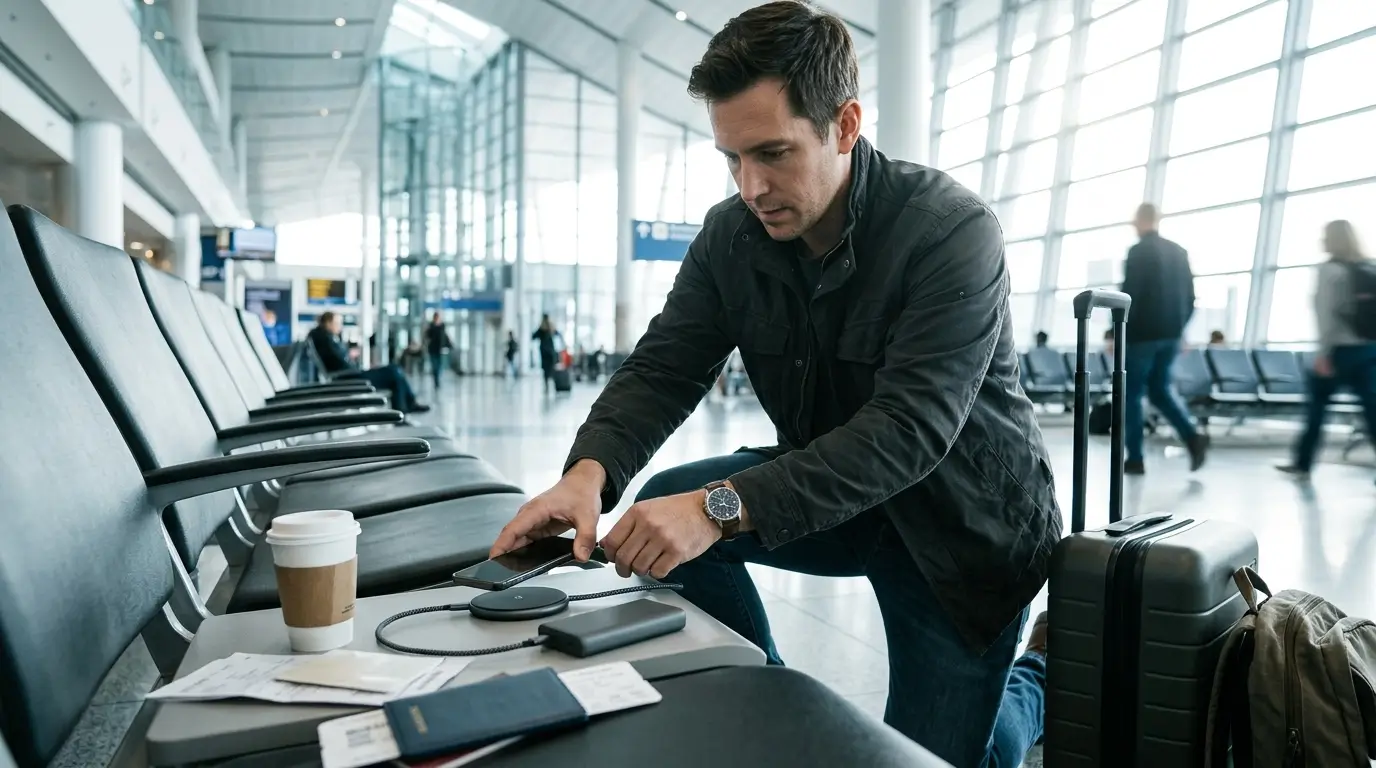
Wireless charging at home is nice. Wireless Charging Explained for Busy Travelers Wireless charging at a gate with no outlets is survival.
A wireless power bank is the answer. It has a pad on one side and a battery inside. Wireless Charging Explained for Busy Travelers You stick it to your phone and walk around.
The Samsung 10,000mAh wireless battery pack is solid for Android folks. It supports fast charging and has a USB-C port for when you need the old school cable.
For iPhone users, the Anker MagGo Power Bank is a lifesaver. It snaps on, charges wirelessly, and holds enough juice for a full phone charge.
Do not buy a wireless power bank that is under 5,000mAh. It will die before your first layover.
Why You STILL Need a Cable in Your Bag
Wireless charging is great, but it is not invincible. Remember my 2% airport story? I ended up using a cable.
Here is the truth: airplane seats, some airport lounges, and rental cars still rely on USB ports. If you do not have a cable, you are stuck.
Carry one short USB-C cable and one short Lightning cable, depending on your gear. Coil them in a small pouch.
Also, some rental cars have CarPlay that only works with a cable. You do not want to be that person arguing with Siri for twenty minutes.
Packing a backup cable is not a sign of weakness. It is a sign you have traveled before.
The Car Rental and Taxi Charging Problem Solved
You get into a taxi in a foreign city. You see a wireless charger built into the console. You think, great.
But the taxi’s charger is a 5W trickle. Your phone’s navigation app drains more power than it adds.
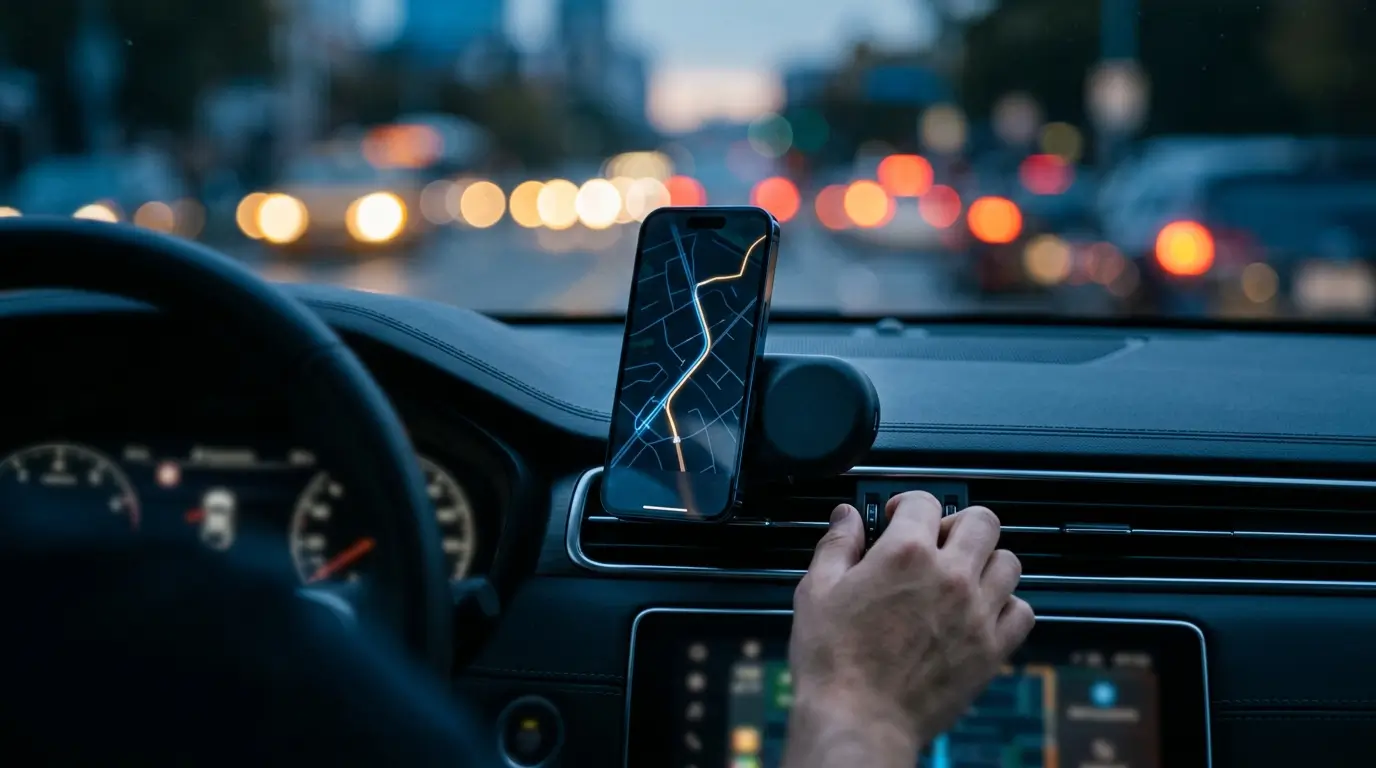
This is why I bring a small magnetic vent mount with me. It has a MagSafe pad and a built in battery. I clip it to the vent, and my phone stays charged while I navigate.
Do not rely on the vehicle’s hardware. It is almost always outdated. Bring your own mount if you plan to drive.
What About Airport Security?
Every TSA agent has seen it all. A wireless charger just goes in your tech pouch with your other electronics.
The tip is to keep your charger in the same pocket every time. That way, you do not hold up the line digging for a tangled pad.
Also, make sure your power bank is under the airline’s capacity limit. Most wireless power banks are around 10,000mAh, which is safe. But do not buy a giant 30,000mAh brick and expect to fly without questions.
The Case Problem Nobody Warns You About
I cannot count how many times I have watched someone set an expensive phone on a wireless pad and nothing happens. Their case is too thick.
PopSockets, metal plates, and thick leather wallets all block the charging signal. If your phone has any of those, you are wasting your time.
The fix is simple. Get a MagSafe compatible case, or take the case off. For Android, look for cases that are marked “wireless charging compatible.”
A case that is too thick is the number one reason people think wireless charging is broken. It is not. It is just blocked.
Should You Buy a Cheap Pad on Amazon?
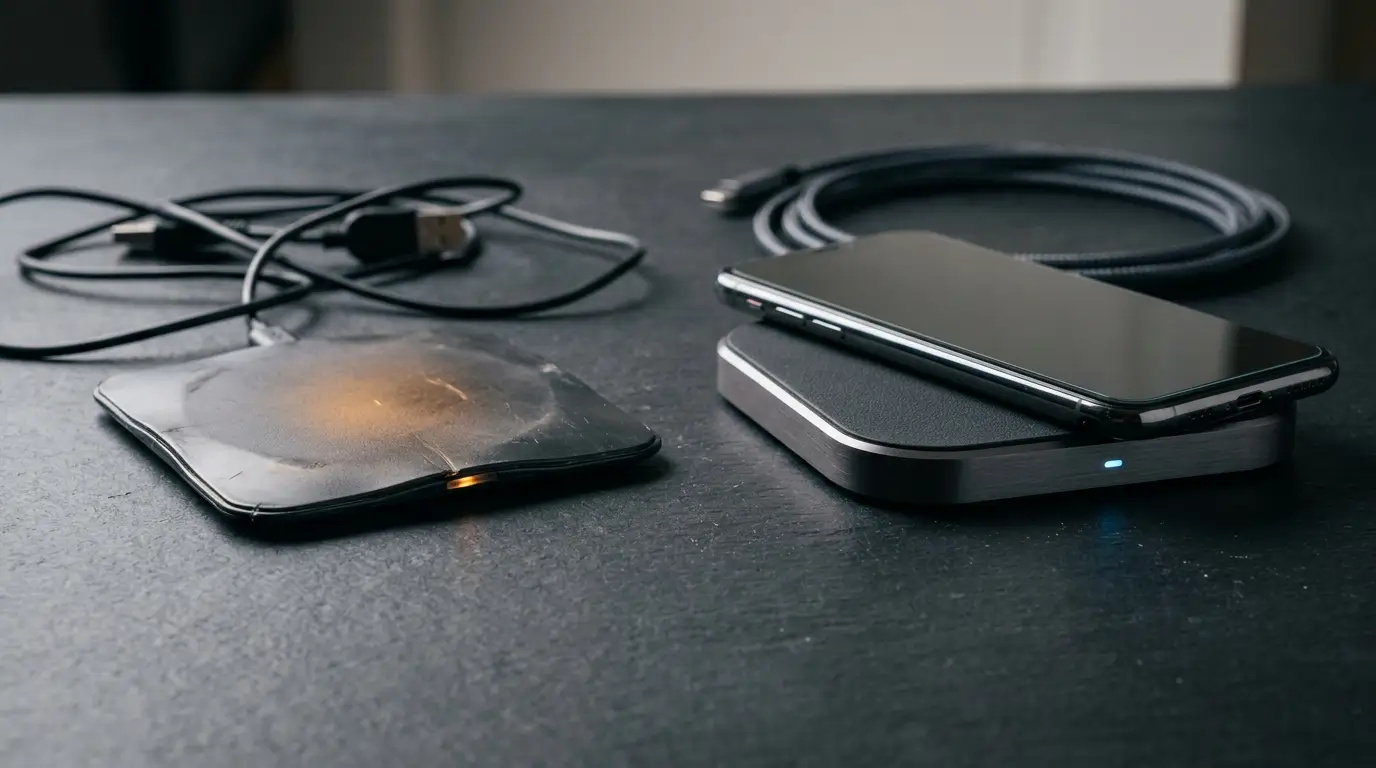
I have a rule: do not buy a wireless charger from a brand you have never heard of. The jungle is full of pads with fake wattage claims.
A cheap pad might say 15W, but it only delivers 5W to your phone. Or it might overheat and slow down. Or it might stop working after a week.
Spend a little more for a brand like Anker, Belkin, or Samsung. You are not paying for the logo. You are paying for the chip inside that manages heat and speed safely.
Your phone costs a thousand dollars. Do not protect it with a ten dollar charging pad that could mess with its battery.
FAQs
How fast is wireless charging compared to a cable?
It is slower. A cable can charge your phone in about an hour. A wireless pad usually takes two to three hours for a full charge. The convenience is real, but if you need a full charge in twenty minutes, use a cable.
Can I use wireless charging on a plane?
You cannot use wireless charging through the airplane seat. Seat power is almost always wired. However, you can bring a wireless power bank and charge your phone in the air. Just keep it in your personal item, not your checked bag.
What is the best top wireless charging option for a tight budget?
The Anker 313 Wireless Charger is a good bet. It costs less than a decent dinner, it charges at 10W for Android, and it is small. It does not come with a wall adapter, so use the one that came with your phone.
Do wireless chargers work through phone cases?
Yes, if the case is thin. Thick leather wallets, metal plates, and PopSockets will block the signal. If you have a case thicker than 3mm, take it off before charging. MagSafe cases are the safest bet for iPhone.
Why does my phone get hot when charging wirelessly?
Heat is normal, but it should not be hot to the touch. Cheap pads and misaligned coils cause extra heat. If your phone is too hot to hold, stop charging. Heat kills battery health over time.
Conclusion
Wireless charging is not a gimmick. It is a small upgrade that makes travel feel less chaotic. Grab a reliable pad, keep a cable for backup, and you will never panic about battery life at a gate again. Have you ever had a charger fail you at the worst possible moment?



One thought on “Wireless Charging Explained for Busy Travelers 2026”